

Healthcare Operations in 2026: Why Smarter Workflows Matter More Than Working Hard
"Operational excellence isn't about doing more work—it's about removing the work that doesn't create patient value."
Healthcare organizations today are under constant pressure to deliver exceptional patient care while managing rising demand, workforce shortages, regulatory requirements, and increasing operational complexity. Yet many hospitals and clinics still lose valuable time to repetitive administrative tasks, disconnected workflows, and inefficient processes.
The real challenge isn't that healthcare professionals aren't working hard.
The challenge is that too much of their time is spent on activities that don't directly improve patient outcomes.
Recent industry trends show healthcare providers are increasingly investing in AI-assisted workflow automation, intelligent documentation, and digital care coordination to reduce administrative burden and improve operational efficiency.
The Hidden Operational Challenges Slowing Healthcare
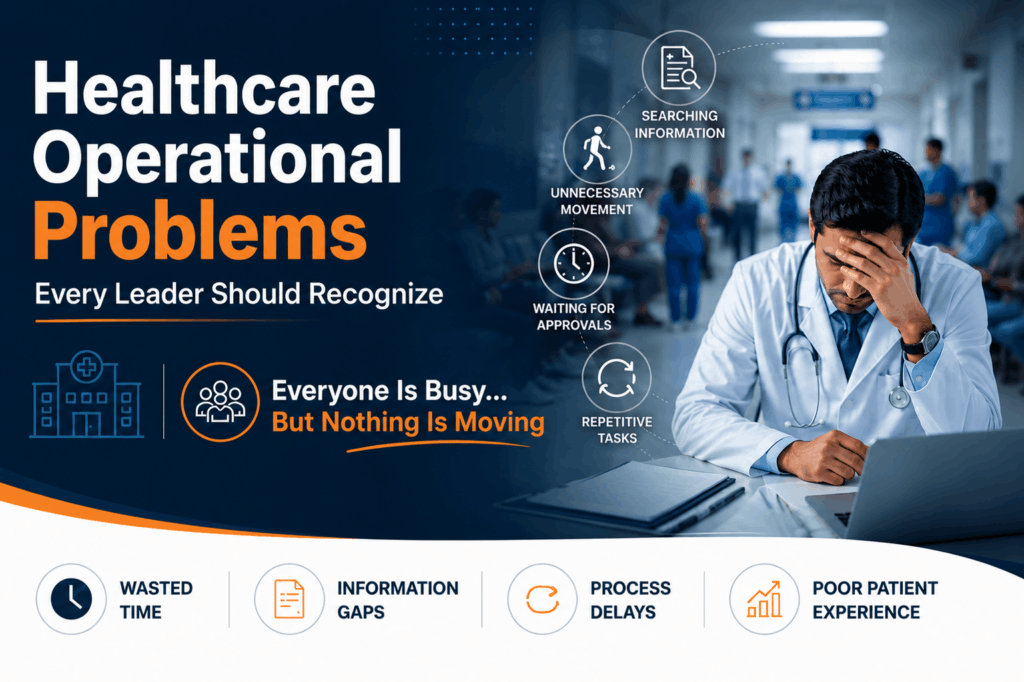
Healthcare leaders recognize several recurring operational bottlenecks that affect both staff productivity and patient satisfaction.
Long Patient Waiting Times
Busy hospitals don't always mean efficient hospitals. Delays often occur because patient information, approvals, and clinical workflows move slower than patients themselves.
Administrative Overload
Healthcare professionals spend countless hours on registration, documentation, scheduling, approvals, billing, and repetitive follow-ups instead of focusing on patient care.
Fragmented Workflows
Disconnected systems create communication gaps between departments, increasing delays, duplication of work, and avoidable errors.
Poor Care Coordination
When clinical, administrative, and support teams operate in silos, patient journeys become longer and less predictable.
Staff Burnout
Administrative complexity continues to contribute to clinician fatigue and reduced job satisfaction, making workforce sustainability a growing concern. AI-assisted documentation and automation are increasingly being adopted to address these challenges.
A New Question Every Healthcare Leader Should Ask
Instead of asking:
❌ "Are our teams busy?"
Ask:
✅ "Which activities actually improve the patient experience?"
This simple mindset shift transforms operational strategy.
Instead of measuring activity...
Organizations begin measuring value.
The Future of Healthcare Operations
Leading healthcare organizations are redesigning operations around intelligent workflows rather than manual processes.
Modern digital healthcare focuses on:
AI-powered workflow automation
Automated clinical documentation
Intelligent patient routing
Real-time operational dashboards
Digital patient engagement
Connected healthcare ecosystems
Predictive resource planning
Healthcare workflow automation is increasingly viewed as a strategic investment that streamlines scheduling, documentation, billing, and coordination while giving clinicians more time with patients.
Operational Excellence Is a Patient Experience Strategy
Every unnecessary click...
Every repeated phone call...
Every delayed approval...
Every manual data entry...
Represents time that could have been spent improving patient care.
Small operational improvements create significant organizational impact.
Reduced waiting times
Faster clinical decision-making
Better patient satisfaction
Improved staff productivity
Lower operational costs
Higher quality outcomes
Organizations implementing intelligent automation frequently report measurable improvements in efficiency, turnaround times, and workforce productivity.
Looking Ahead
Healthcare transformation is no longer driven solely by new technology.
It is driven by smarter processes.
Hospitals that combine AI, automation, interoperable systems, and patient-centered workflow design will be better positioned to reduce burnout, improve efficiency, and deliver exceptional care.
The goal isn't simply to digitize existing processes.
The goal is to eliminate unnecessary work so healthcare professionals can focus on what matters most:
❤️ Caring for patients.
💬 Final Thought
Great healthcare operations are invisible to patients. When workflows are connected, information flows seamlessly, and teams spend less time on administration, patients experience faster, safer, and more compassionate care.